
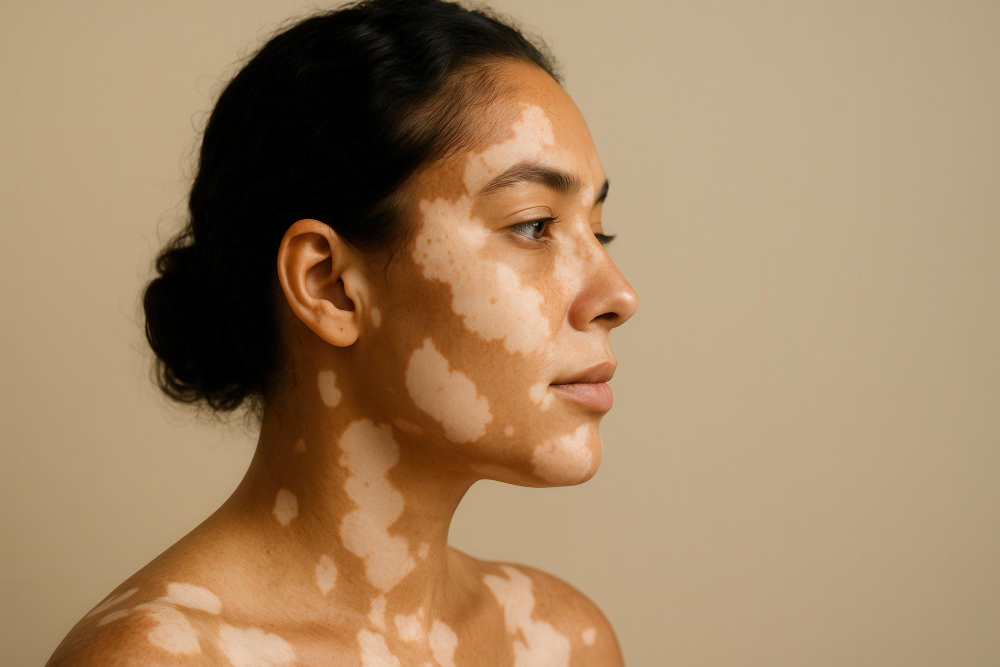
What is Vitiligo?
Vitiligo is a skin condition that causes patches of skin to lose color. These patches may appear anywhere on the body. Often, the change is more noticeable on people with darker skin. Vitiligo is not contagious, so you cannot catch it from someone else. According to the World Health Organization (WHO), about 1% of the world’s population has Vitiligo. Although it is not harmful, it can affect a person’s confidence and self-esteem. Early understanding and support can help people manage Vitiligo better.
Common Symptoms of Vitiligo
Vitiligo symptoms can vary from person to person. However, most people notice white or lighter patches on their skin. These patches often start small and may grow over time. In addition, Vitiligo can affect hair, eyes, and even the inside of the mouth.
Sometimes, these patches spread slowly. But in other cases, they may remain the same for years. If you notice any of these signs, it is wise to talk to a doctor.
Causes and Risk Factors
Doctors do not know the exact cause of Vitiligo. However, it happens when the cells that make skin color, called melanocytes, stop working or die. Several factors may increase the risk of developing Vitiligo.
Although anyone can get Vitiligo, it often starts before age 30. Still, it can develop at any age. According to the Centers for Disease Control and Prevention (CDC), genetics and immune system problems play a big role.
How Vitiligo is Diagnosed
Doctors use several steps to diagnose Vitiligo. First, they will ask about your medical history and examine your skin. Next, they may use a special lamp called a Wood’s lamp. This lamp helps them see the patches more clearly. Sometimes, doctors may take a small skin sample, called a biopsy, to rule out other conditions. Blood tests may also be done to check for other autoimmune diseases. Early diagnosis can help you start treatment sooner.
Treatment Options for Vitiligo
While there is no cure for Vitiligo, many treatments can help restore skin color or slow the spread of patches. The best option depends on your age, health, and how much skin is affected. Always talk to a dermatologist before starting any treatment.
Because results vary, it may take time to see changes. For best results, follow your doctor’s advice closely.
Lifestyle Tips and Prevention
Although you cannot always prevent Vitiligo, certain habits can help protect your skin and boost your confidence. For example, using sunscreen daily helps prevent sunburn and reduces contrast between affected and unaffected skin. Wearing protective clothing can also shield your skin from the sun.
Moreover, managing stress through relaxation techniques may help reduce flare-ups. While Vitiligo cannot always be prevented, these steps can make living with it easier.
Living with Vitiligo: Support and Resources
Living with Vitiligo can be challenging, but you are not alone. Many people find comfort in talking to others who understand their experience. Support groups, both online and in-person, can offer advice and encouragement. In addition, counseling may help if you feel anxious or sad about your skin changes.
Remember, Vitiligo does not define you. With the right care and support, you can lead a full and happy life.
If you notice any signs of Vitiligo or have concerns about your skin, consult a dermatologist or healthcare provider for personalized advice and treatment options.